Wednesday, April 26, 2006

Oh My God! Look Sir!

Our van service driver, Roger Jr., as we call him, picked me up this morning at 6 a.m. for a trip to the Manila VA Regional Office. We got onto the North Luzon Expressway at the Angeles City – Magalang entrance and headed south toward Manila. I stared sleepily out the passenger side window watching as farmers winnowed their rice crop or burned the resultant waste straw. Why they burn it, I have no idea. They burn everything here; I hate that. I shrugged off that vexing question and settled in for the hour and a half ride to the U.S. Embassy.

Suddenly I was snapped out of my reverie, “Oh my God! Look SIR!”

I turned toward Roger and saw him pointing at the oncoming traffic on the other side of the median. A jeepney was careening crazily from side-to-side 100 meters or so ahead of us. Roger was already slowing down as the ancient, out-of-control vehicle took one last wild swerve into the center median, caught its right front wheel in the soft ground and flopped over on its right side.

We gasped as a dust cloud enveloped the crashed jeep, and then we were past it. “I hope that thing isn’t full of people,” I prayed aloud looking back. I knew my hopes were in vain, because people tend to pack themselves by the bunch into cars and vans over here. It’s amazing how many they can fit in. Sometimes its like watching the little clown cars where one person after another climbs out, and 10 minutes later, they are still debarking. Folks around here are a lot smaller than Americans, so they can really pack ‘em in too!

By the time we could get stopped, we were 50 feet past the wreck site. Three "good samaritan" cars were already parked behind us, and more continued to pull over. Even more cars had stopped on the other side of the highway. I was relieved that people were stopping to help.

Before the dust had settled, the driver appeared from the other side of his turned over vehicle. He frantically scrambled to the rear entrance of his flipped jeepney and crawled half in. He began pulling out items, and then a woman in jeans crawled out, followed by a young man. Passersby were now assisting, and one reached in and pulled out a small boy, who looked to be 5 or 6 years old. People of various ages and gender were starting to stagger out or were pulled out by others. I’d seen enough.

“Come on Roger. Let’s get to a call box and call for an ambulance.”

There’s no 911 here, so the call box was the best option to get help fast. We piled back into our van and sped off. In less than a mile we found an emergency phone, but before we could get out, I saw a caravan of four ambulances speed past us toward the toppled jeepney. I was amazed and thankful to see help was on the way, and so quickly.

“Rog, that is even a faster response than you can get in the States. Wow!”

For the next 20 or so miles, we talked of watching the jeepney flip over, and the amazing aftermath. Roger was overcome with emotion at first, after seeing that children were involved, so I did all the talking for awhile.

Here are my conclusions after what I saw today:
1) My faith in the goodness of Filipinos has been buttressed and increased. People were falling over themselves to stop and help.


2) If you’re going to have a car accident in the Philippines, have it on the North Luzon Expressway.
xxx
3) The emergency response system on that expressway is very very good.

4) Jeepneys are inherently unsafe at high speeds, and shouldn’t be allowed on superhighways.

As I’ve remarked before, I’m much more impressed with the way people in this country react to accidents and mishaps than, for instance, the way folks react to similar instances in the supposedly more advanced country of Japan. I don’t like to say negative things about any group of people, but the Japanese could really stand a dose of human kindness, Filipino style. Read this earlier post that explains exactly what I mean, based on my own anecdotal experiences in Japan.

We could only speculate what caused that jeep to go so violently out of control. It appeared to be overloaded, so maybe the suspension failed; or it could have blown a tire, or perhaps ALL of the above. On the way back, we inspected the road surface and could find no skid marks at all, so it seems the driver never even tried to apply the brakes, if he had any at all. Then again, I don't see how he could -- the way that jeeney was fishtailing; he probably couldn't even FIND the brake pedal. If there are any mechanics or crash experts out there, feel free to interject with your insights.

Anyway .... Another day, another adventure.

The Rizal Diorama...A "Must See" in Manila


"The fam" and I took a side trip to Luneta Park in Manila. With so much local history represented in that place, I knew I would wind up there eventually.

Over the span of 74 years, the cruel Spaniards took the lives of almost 140 Filipinos in a small northwest corner of the park, a place that I call the killing ground. Many of those martyred in that hallowed place were totally innocent of the charges of treason and rebellion leveled at them; just the same, to set an example, they were either shot or garroted.

In fact, in 1872, Spain choked the lives out of three innocent Filipino priests in Luneta, which made them forever beloved and famous to generations of their countrymen. I’m an American, but I’ll never forget their names—Fathers Burgos, Gomez, and Zamora. Falsely accused of masterminding the '72 Cavite Rebellion, one of the priests pleaded, “Why are you killing me? I have done nothing!” The Spaniard placing the metal “squeeze collar” around his neck, answered callously, “Don’t you understand? It doesn’t matter.”

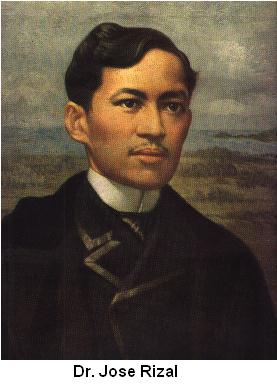
Twenty-four years later, on December 30, 1896, they murdered another innocent Filipino, the most famous “Pinoy” in the history of this country—Jose Rizal.

The Spanish in charge of their Philippines colony made a huge mistake when they killed this incredibly intelligent and talented man. The evil friars and Spanish governing authorities insisted on his demise, but in doing so, they galvanized the rest of his countrymen into finally going through with a full-scale run at independence. Read
this earlier post to get a more in-depth look at this truly wonderful man.

I found the following excerpt online:

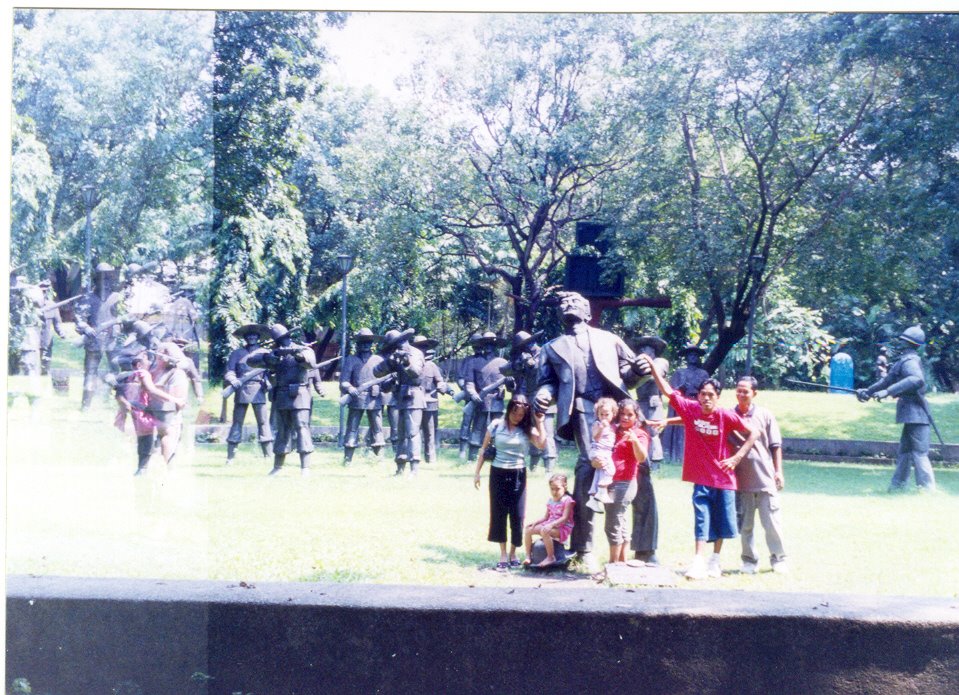
“North of the Rizal monument, near the Chinese Garden, is a small enclosed section. This is the actual site of Rizal's execution. Larger-than-life dioramas show his final days in captivity and his death at the hands of his own countrymen. The Spanish authorities used Filipino, not Spanish soldiers, for his firing squad. As the diorama statues show, Rizal's last act of defiance was to face away from his executioners."

We visited the diorama around lunchtime; so naturally, we were almost the only ones there. As I’ve said in previous posts, Filipinos NEVER miss lunch.

I was struck by the size of the figures. As the photos show, the bronze statues tower over mere humans. It cost less than 20 cents per person to enter, and it was money well spent.

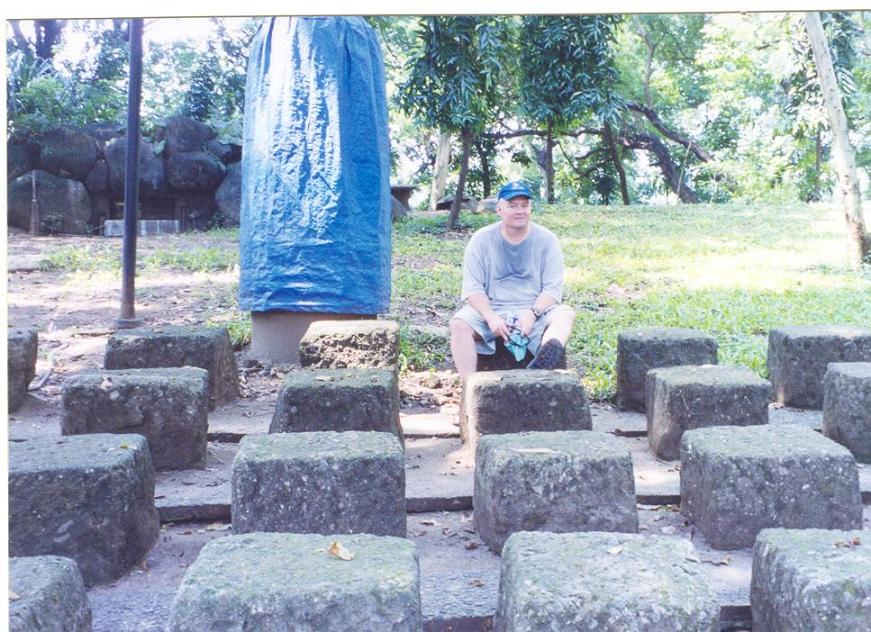
The “enclosed section” around the diorama is made that way by grassy manmade hummocks about eight feet high. I would never have done it that way, since it destroys the way it might have looked at the time of Rizal’s death. As a lay-historian, I am a purist when it comes to the preservation of historical sites. Then again, the way it once looked can never be recaptured, especially since much of the land that was once Manila Bay is now reclaimed land. On his walk to the execution site from his prison cell inside the ancient walled city of the Intramuros, Rizal remarked how wonderful the view of the Bay and how clear he could see the Cavite Peninsula. Unfortunately, these days there is absolutely no way anyone can see Manila Bay from anywhere in the Luneta Park.

The excerpt I found above states that Rizal’s last act of defiance was to face away from his Filipino firing squad. That is a bit misleading, because actually, his statue is supposed to represent him spinning away from the firing soldiers in a last gasp effort to die looking up at the sky, instead of breathing his last face down.

In reality, his last request was to be shot facing his executioners, but the Spaniards refused, citing Spanish law that seditionists are to be shot in the back. Legend has it that as the bullets crashed through his back, with superhuman effort he spun himself so that he could die face up. Considering what happens to the human body when a half-dozen large caliber bullets crash through it, I find this to be a highly unlikely; just the same, it certainly adds grandly to his legend.

As we wondered through the gigantic bronzes inside the enclosed area, I changed my mind somewhat about the presence of all the trees and tall lush hummocks. They provide welcome protection from the hustle and bustle of the outside world. The quiet and peace within its bounds promotes contemplation and reflection.


My girls ran from statue to statue, while I also wandered from one visual to the next, trying to imagine what it must have been like when Dr. Rizal tragically breathed his last. I felt like weeping, but I was angry too, remembering how the spectating Spanish men and women had actually cheered as the peace loving, and yes, SPANISH LOVING man lay bleeding on the ground at their feet. Outraged, I thought, ‘How COULD they?’

Not far from the diorama is the Rizal Monument. I will talk of it in a future post.

Sunday, April 23, 2006

"...We are Lacking Heroes..." ???

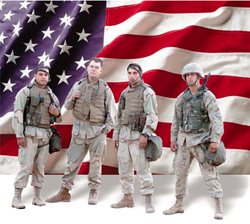
I just watched with but half an ear "The Heartland with John Kasich" on FOX News. His style of animated intensity kind of turns me off, so I can’t normally bear to give him my full consideration. What DID draw my attention was a remark he made to the mother of Mark Bingham, Alice Hoglan, as they discussed the release of the film “Flight 93.” I was shocked to hear him casually remark, “…What we are lacking these days are heroes; we don’t have enough of them…” My immediate reaction was to sit up and shout, “You have GOT to be kidding me Kasich!”

Maybe I’m being a bit sensitive with his throwaway line, and perhaps taking it a bit out of context, but his casual comment highlights exactly what Richard K. Kolb writes about in his article “
Society & the Soldier” as featured in the April VFW Magazine. At the start of his article, Kolb asks a poignant question and it deserves some soul-searching examination:

“Only a fraction of the population is making a sacrifice in the current wars. What does this mean for the nation’s well-being?"

Before going on to Kolb's article, what is frustrating is that we HAVE hundreds of heroes AND their stories available to us; and THAT is what bothers me about the Kasich comment. He seems to ignore the THOUSANDS of couageous folks who are serving at THIS VERY MOMENT in Afghanistan and Iraq, and in other places we are not aware of in The Terror War.


Among THESE stout-hearted volunteers are the UNQUESTIONABLY heroic, men and women who have been decorated for acts of bravery—winners of Medals of Honor, Silver Stars, Air Force and Navy Crosses, Bronze Stars, and Purple Hearts. Yet, most Americans are completely oblivious of the actions that resulted in the award of these medals. Why is this? In fairness to John Kasich, he features a few of these brave men and women, but not NEARLY often enough.

I don’t completely blame the media—news organizations report what interests their viewers, and evidently, Americans for the most part don’t want to be upset by “The War.” I find this extremely troubling, and it supports my contention that those of us who serve, who have served, and intend to serve are different and might well be on a higher moral and patriotic plane apart from the millions of civilians who would NEVER consider, for any reason, the concept of joining the armed forces. It seems to me that many of these folks deal with their selfish (or perhaps unmindful) attitude by simply ignoring anything to do with the military, or worse, by denouncing the military or anything to do with The War.

Below is Mr. Kolb’s article wherein he observes similarly that there is a gulf of mindset between servicemen and women AND their civilian citizen counterparts. If you can bear to, take a look at your own heart and consciense as you read. Also, I’ve written two earlier related posts: “
Serve for Citizenship,” and “Serve for Citizenship -- a Response.” I must warn you, all three pieces may be difficult to read if you have never served.

SOCIETY & THE SOLDIER, By Richard K. Kolb

“America is divided between the vast majority who do not serve and the tiny minority who do,” T. Trent Gegax and Evan Thomas wrote in Newsweek. In fact, only four-tenths of 1% of citizens wear a military uniform, even amidst the highly touted war on terrorism.

Let’s take a look at what some other commentators have had to say about this state of military affairs in America today.

“Americans may love their military,” Loyola University political scientist John Allen Williams wrote in 1999, “but it is in the same way they might love their Rottweiler: They are happy enough for the protection but do not want to become one themselves.” Serving in the armed forces is “as unfathomable as life on another planet,” he concluded.

Consequently, few citizens have a direct link to those who do serve. Princeton University political economist Uwe E. Reinhardt calculated that “no more than 10 million Americans have any real emotional connection to these wars.”

In his Washington Post essay entitled “Who’s Paying for Our Patriotism?” Reinhardt figured “these wars visit no sacrifice of any sort—neither blood nor angst nor taxes— on well over 95% of the American people.”

None of this should come as any surprise. As Scott Curthoys wrote in Army Times: “Since the war in Vietnam and the end of compulsory service, the military has become an entity increasingly outside of American society—an organization that serves the society but is not really of the society. As a result, most young Americans are content with letting someone else do the fighting.”

Indeed, they are, and so are their parents. “America’s elite would prefer somebody else’s daughters to die rather than one of their own sons,” says Northwestern University military sociologist Charles Moskos.

Guilt is Well-Placed

There is little dispute on this point, and much to sustain it. Under the heading “Patriotic Guilt” in the Los Angeles Times, 28-year-old Oren Rawls readily admitted: “I know full well that relatively few in my generation buy into the ‘for flag and country’ bit, and that my sense of patriotic guilt would probably make for a good joke or two in the service. The honest truth is that nothing less than a full-fledged draft could get me to put on a uniform.”

This does not bode well for national cohesiveness. What we have is “a society which pays a fraction of its population to take all the real risks of citizenship,” said Anthony Cordesman of the Center for Strategic and International Studies.

“The reality is you will have had a group of Americans who bore almost all of the burden of citizenship. For most Americans it [the war] is being fought by other families’ sons and daughters, who are both out of sight and often out of mind.” As Thom Shanker succinctly put it in the New York Times: “America is not a nation at war, but a nation with only its military at war.”

And that military has only a handful of service-age males among its ranks. As Moskos observed of serving in the wars in Afghanistan and Iraq: “It’s not a generational experience.”

Support for those in uniform is strong. But is it superficial? Do those on the lines think it is genuine? In a Time essay—“The Danger of Yellow Ribbon Patriotism”—Joe Klein quoted an Iraq vet as saying, “You just get the feeling that the rest of the country doesn’t understand. They’re not part of this. It’s peacetime in America, and a few of us at war.”

Moskos agrees: “The whole country is undergoing patriotism lite.” While troop support efforts receive well-deserved publicity, some symbolic gestures such as sporting bumper stickers demand little. “These acts are small ways of showing some recognition, because we’re not doing it any other way.”

Societal Covenant Inviolate

With the absence of a draft and the underlying notion of civic obligation lost for more than a generation now, the rest of the country does not get it. What does all this mean for the nation’s future defense? Joan Vennochi, writing in the Boston Globe, answered this way: “Understanding history means understanding that countries are born, survive and flourish because individuals are willing to die for them.”

Still, those serving and their families are content with what exists in terms of support. “I think that’s the difference,” Army wife Jacqui Coffman told the Los Angeles Times. “When you go back to Vietnam, you were looking at the American public actually disliking the American soldier. That isn’t true anymore.”

Is that enough, though? Like all wars, soldiers want their sacrifices to have meaning. As one serviceman told his mother before he was killed in Iraq, the prayer of every warrior is universal: “Just don’t forget me.”

Remembrance is crucial, but so is assisting those who survive near death. “As a society, we still do not know how to welcome home the wounded warrior—how to express deep appreciation and respect at the same time as profound grief,” Nancy Sherman wrote in the Boston Globe. Her book on this subject called Stoic Warriors will soon supplement Sherman’s editorial, “When Johnny Comes Home.”

Like many other Vietnam vets, Marine veteran and Los Angeles Times staff writer John Balzar is greatly concerned about the post-war reception. “Today’s heroes are in danger of becoming tomorrow’s damaged goods,”

Balzar wrote in the paper. “Public opinion can be fickle.”Balzar got to the essence of the matter. “How society collectively greets and treats overstressed veterans, now and in the years to come, is one of the most significant factors in whether they heal and how quickly,” he wrote.

Veterans of Afghanistan and Iraq, no matter how small their relative numbers, are bound to make valuable contributions to the society for which they sacrificed so much. Just as their predecessors have done.

Early on, Army Special Forces Maj. Roger D. Carstens offered this assessment in USA Today: “They will throw their war-born maturity and wisdom into driving the machinery that runs this country. They will run ethical and energetic companies; provide expert and values-based service to your families; serve us well in elected office; and raise their children to be good citizens.”

That is quite a bargain for a society that gives so little in return.

Society has a pact with its armed forces. That unwritten agreement is implicit in its intent. It’s an obligation more important than ever, with so few protecting so many. Thomas Mockaitis, a DePaul University history professor, has called this pact “A Covenant with the American Soldier.”

No matter the ultimate outcome of the wars, we as a nation have a debt to repay long after the fighting stops.

So, as Knight Ridder senior military correspondent Joseph L. Galloway asked, “What are we doing as a people and a nation to deserve the service and sacrifice of such men and women?”
rkolb@vfw.org

Wednesday, April 19, 2006

…And We Lose Another

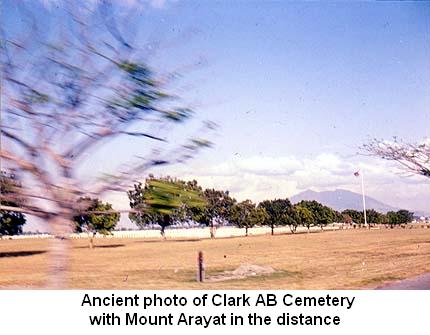
We buried another veteran today—a good friend of mine—in the American Cemetery on the former Clark Air Base.

Jim did his military years, about 25 of them, in the United States Navy. By the time I met him late in 2002, he was already in his late 70s and in a physical downward spiral. The poor health he suffered through during his last years can mostly be attributed to his days in Vietnam. Exposure to Agent Orange led to his diabetes, and that led to some pretty unkind cardiovascular conditions, which finally toppled him last week.

Like a lot of us vets, Jim never stopped being “in.” I was helping him with a disability claim against the ever-pissy VA, and I was struck by his fervor for an idea he had concerning his beloved U.S. Navy. He told me about an officer he had worked with during his last years on active duty. It seems that this “0” was somewhat ahead of his time when it came to management style. Jim raved about this man, and how he actually LISTENED to his men, no matter their rank, before issuing orders. He went on about how high the morale was, and how effective it worked, especially when everyone felt that their opinions were valued.

I nodded knowingly as Jim spoke glowingly of this “renaissance officer,” under whom he had served so enthusiastically in the late 1960s. Much of what Jim described, I had already been taught in all of my professional military schools—in ’83 at the Yokota AB Leadership School, again in ’85 at the Kadena AB NCO Academy, and once and for all in ’97 at the Senior NCO Academy at Gunter AFB, Alabama.

Jim wanted to share the wonderful experiences he had had while working with this enlightened officer, and he wanted me put them in the format of an open letter to the “brass,” so that the entire United States Navy could benefit from what he had learned during that cherished time. I had to carefully explain to him that writing his letter was no longer necessary, since most of the services already operated as he described, at least theoretically, to some degree.

Remember, Jim had served proudly in the “brown shoe navy” during WWII, Korea and Vietnam. By the time I met him, he was already retired for well over 30 years. Yet in his mind, he was still IN! He still wanted to contribute; he was still worried about HIS Navy, and wanted the best for it. I get emotional now thinking about it. I have no doubt that HIS United States Navy was immeasurably better because of his service. Anchors Aweigh and God speed Jim!

Philippine Phil Posted by Picasa